

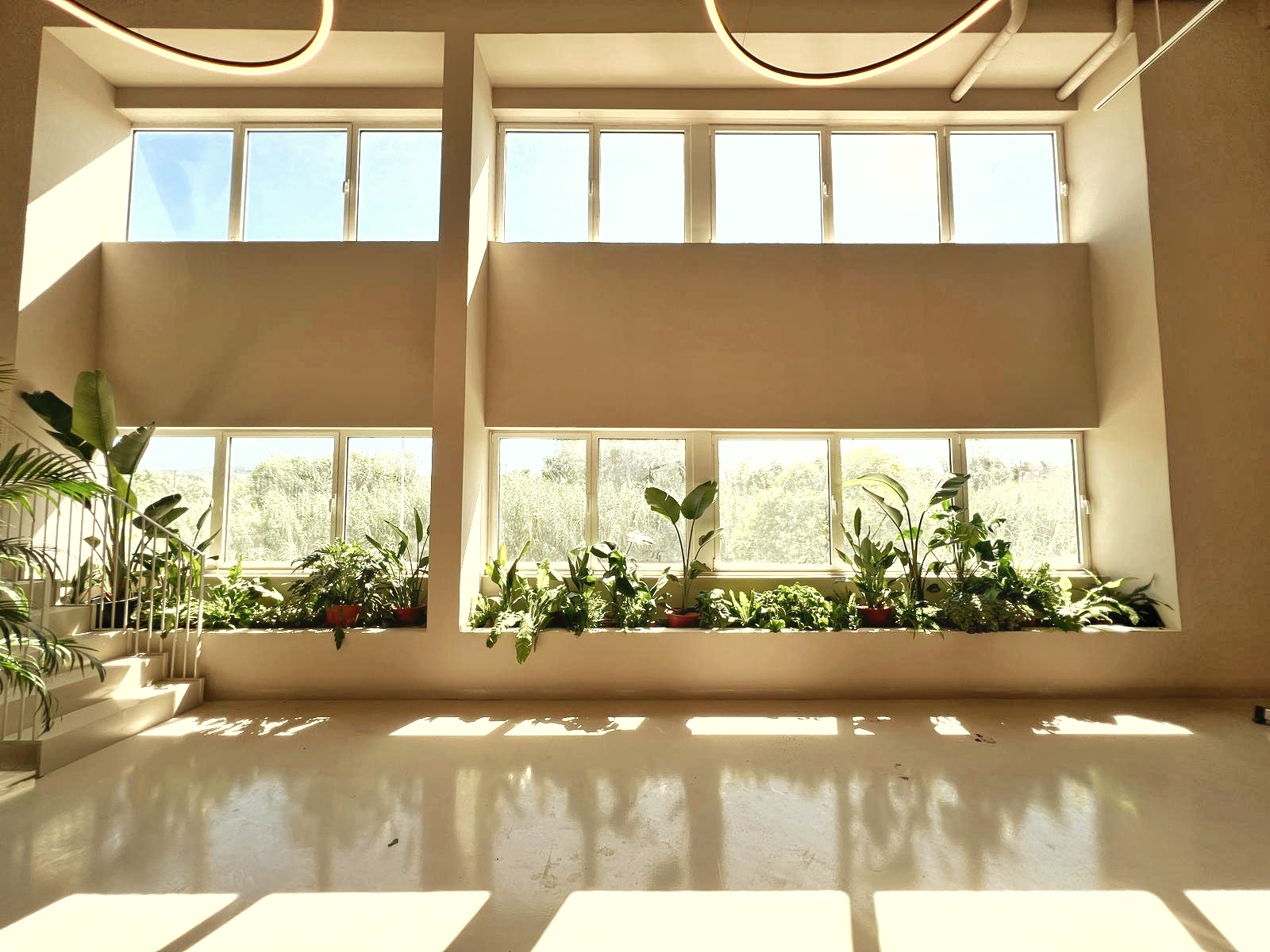
Interior landscaping project at the offices of Papiol Alfombras
This project involved an intervention in the interior spaces of the Papiol Alfombras offices, with the aim of incorporating natural vegetation into existing linear planters integrated within the building’s architecture. The intervention focused on the planting design and botanical selection to transform these circulation areas into green environments that provide visual comfort, environmental quality and identity to the workspace.
Contact us
Description of the proposal
Context and architecture of the space
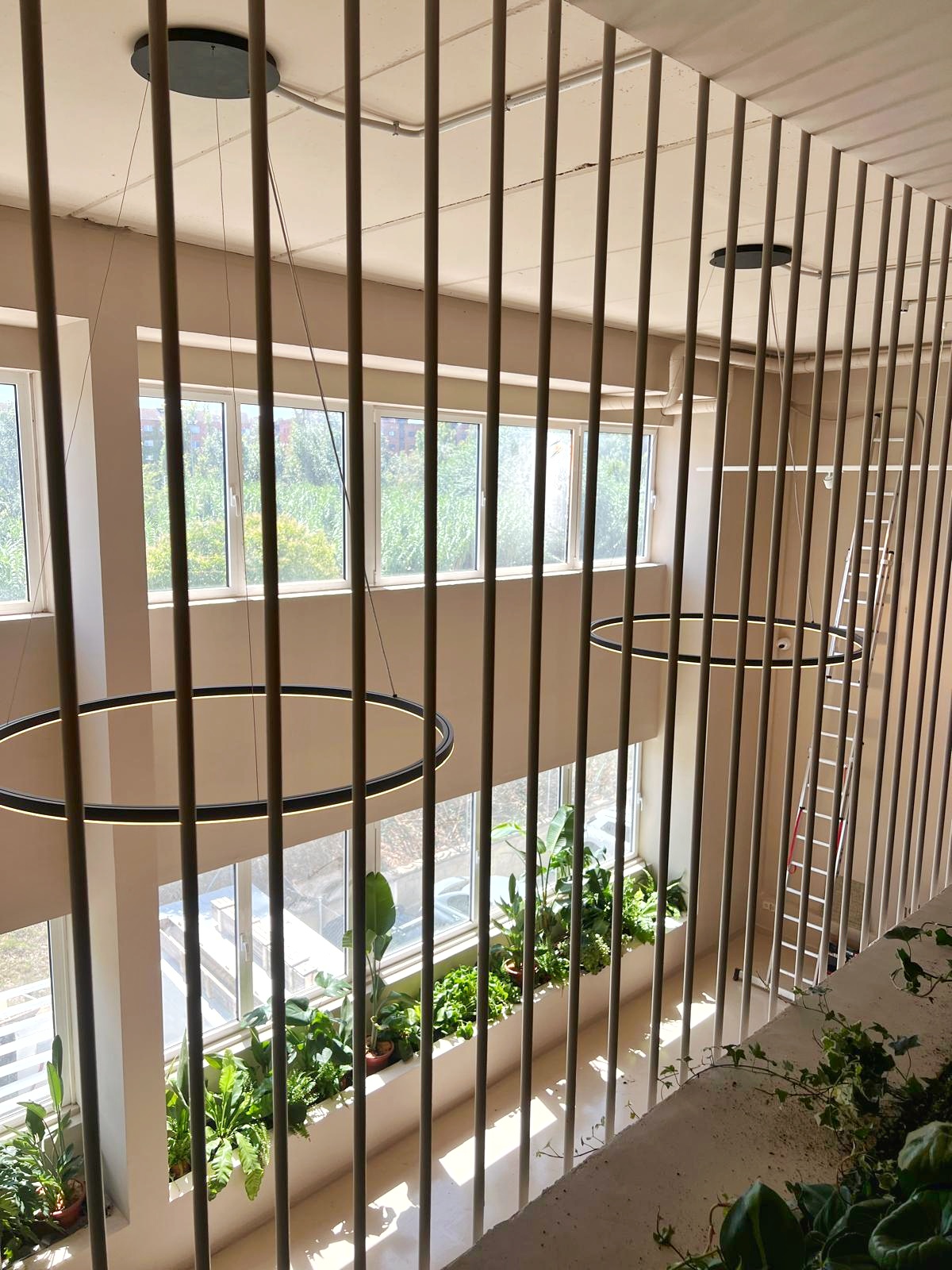
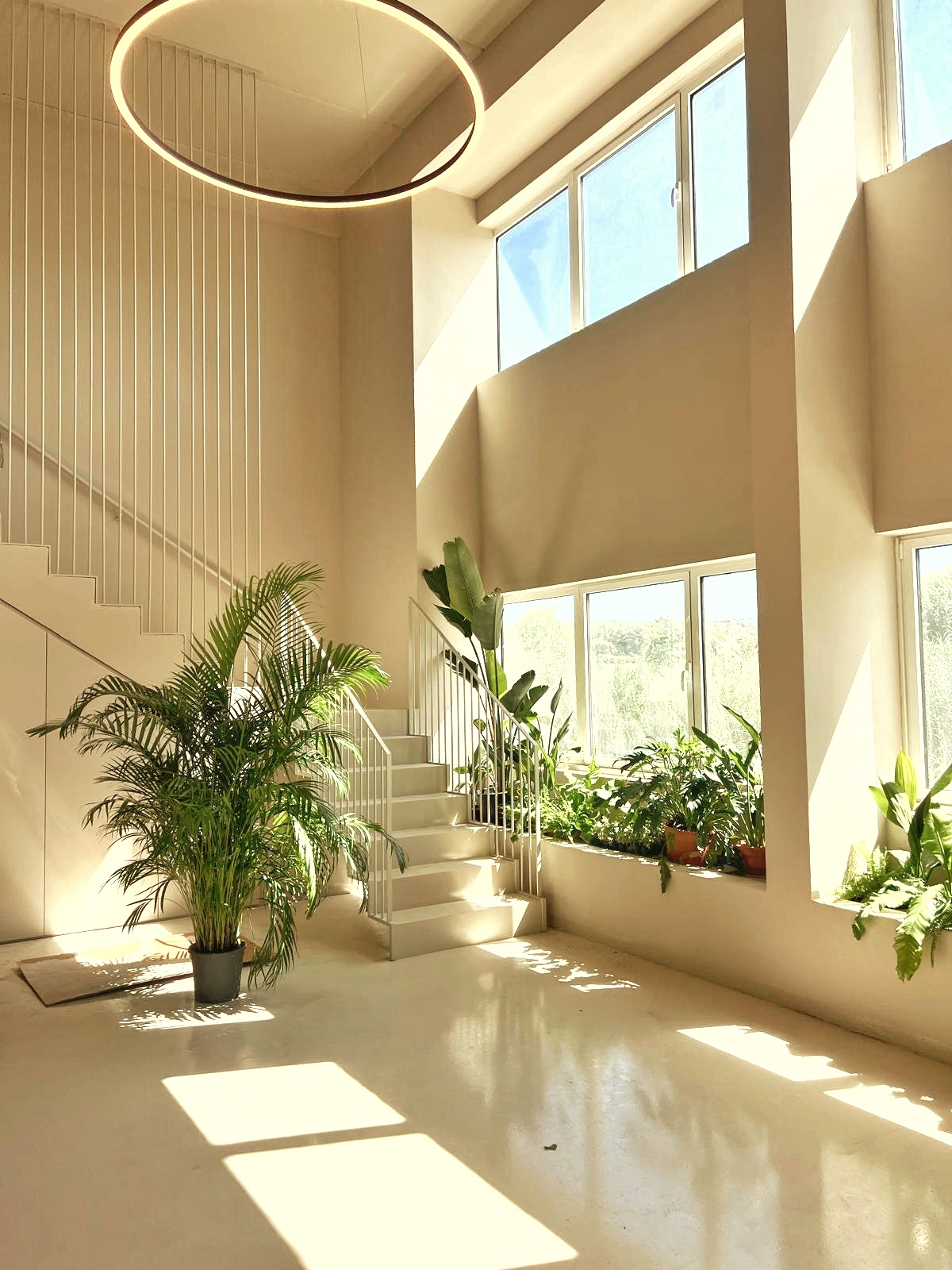
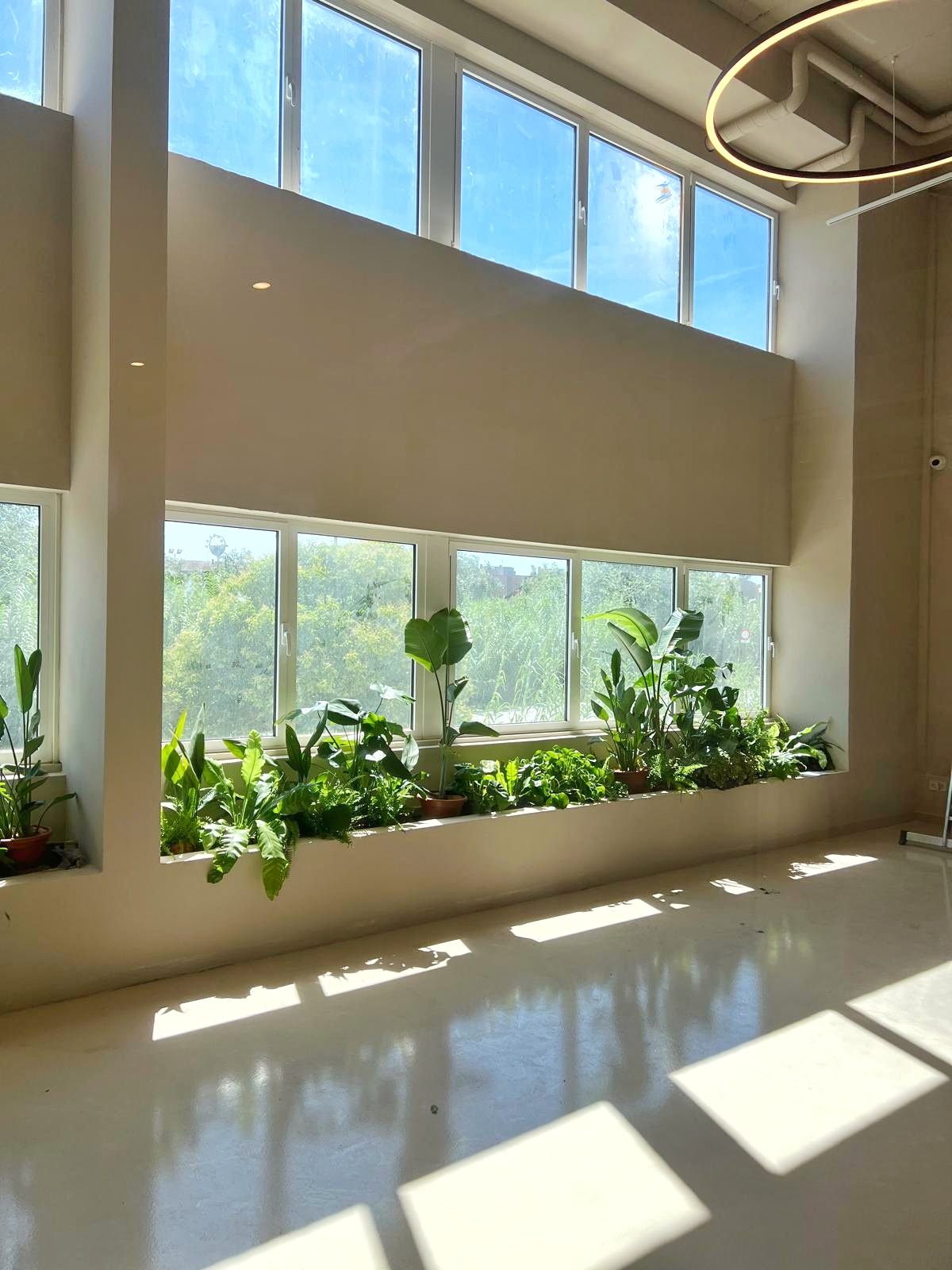
The planters are located next to large windows with abundant natural light and a significant interior height, creating a very bright space with a strong architectural presence.
This type of space allows the use of large-format plants and tropical compositions, capable of dialoguing with the scale of the building while adding plant volume without interfering with circulation paths.
The planting is arranged in linear planters integrated into the architecture, located both on the ground floor and along stair and corridor areas.
Planting strategy
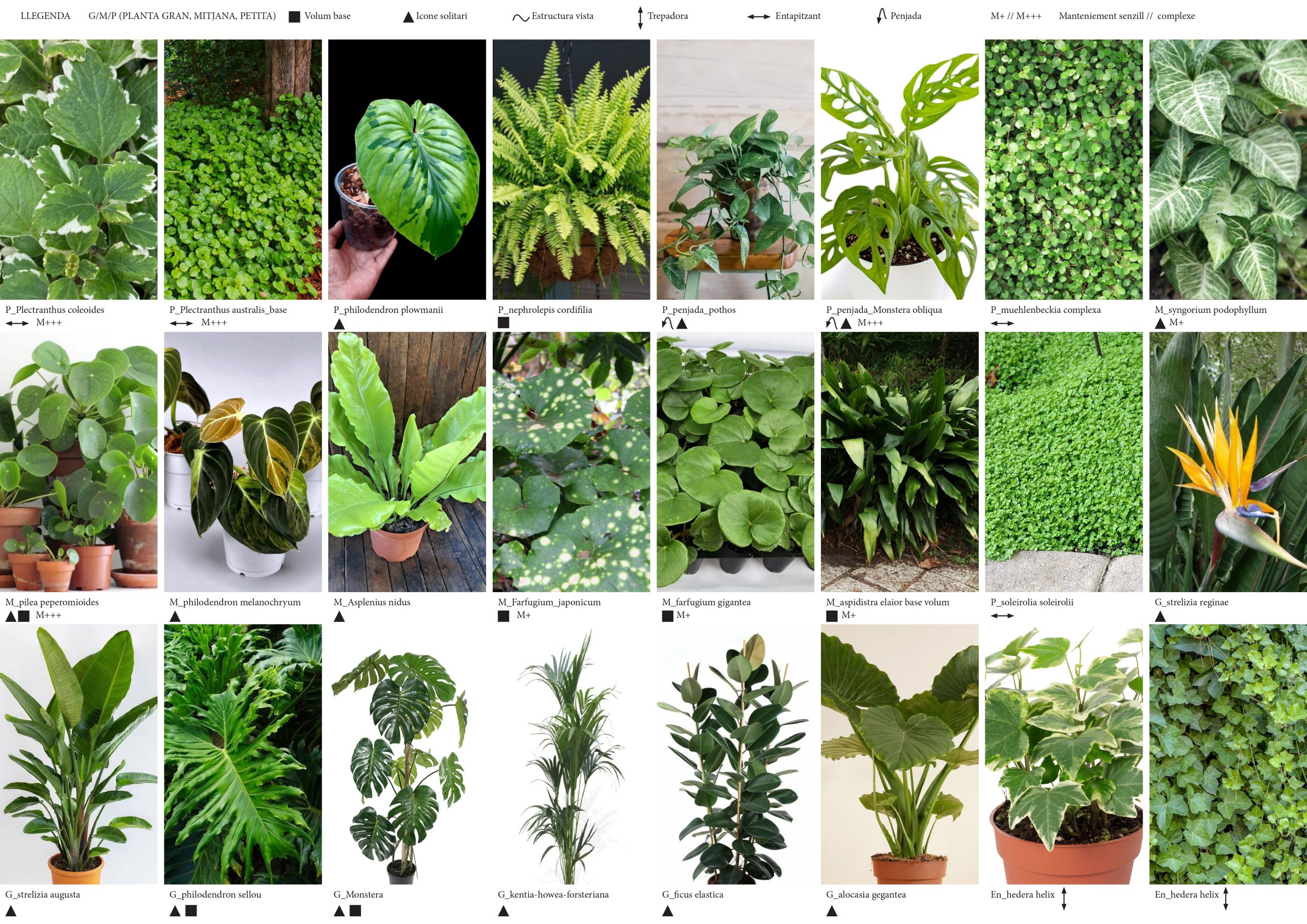
The plant composition has been developed following a clear structure based on three layers:
1. Large-format plant icons
Structural species are introduced to act as focal points within the planters. These plants provide verticality and volume.
Among the main species used are:
-
Strelitzia augusta
-
Strelitzia reginae
-
Alocasia gigantea
-
Ficus elastica
-
Monstera deliciosa
These plants create a clear and recognizable landscape composition within the interior space.
2. Intermediate layer of volume and texture
Around the main plants, a vegetative base of medium-sized species is created to provide density and contrast of forms.
Species used include:
-
Nephrolepis cordifolia
-
Farfugium japonicum
-
Aspidistra elatior
-
Philodendron plowmanii
-
Philodendron melanochryum
-
Syngonium podophyllum
-
Asplenium nidus
This layer creates continuous plant masses that reinforce the perception of an indoor garden.
3. Groundcover and trailing layer
To complete the composition, low-growing or trailing species are introduced to cover the substrate and soften the transition between plants.
Among these are:
-
Plectranthus australis
-
Plectranthus coleoides
-
Soleirolia soleirolii
-
Muehlenbeckia complexa
-
Pothos
-
Monstera obliqua
These species help create a more natural and dynamic appearance within the planting.
Vegetation integrated into architecture
The planting has been designed so that the planters function as a continuous green strip accompanying the interior circulation paths.
The presence of vegetation helps to:
-
soften the architectural geometry
-
bring human scale to the space
-
improve visual comfort in workspaces
-
create a direct relationship with the exterior landscape visible through the windows
The combination of large leaves, tropical textures and trailing plants creates a rich yet balanced composition.
Plant selection criteria
The botanical selection was carried out considering several factors:
-
Adaptation to bright interior environments
-
Low maintenance requirements
-
Contrasts in textures and forms
-
Ability to grow in linear planters
Many of the selected species are commonly used in interior landscaping projects due to their resilience and ornamental qualities.
Final result
The result is a system of interior planters that acts as a continuous vegetated landscape within the building.
The vegetation introduces dynamism, volume and natural character into a contemporary work environment, reinforcing the identity of the space and contributing to the well-being of its users.
Collaborators and Execution
DESIGN: Menhir Landscape Studio
INSTALLATION: Babilon Jardineria
PLANT: Arribas Center
IRRIGATION AND COMPONENTS: Solem
Related projects





Contact form


